The fire you put out is still burning
The hidden electricity monster of the smart home era
and the secret of real carbon neutrality
Every night we switch off the TV with the remote, stop the air purifier, and feel reassured that we have done our bit for the planet. But while you sleep, the appliances in your home never do. This is the uncomfortable truth about network standby power that we keep overlooking.
01 The 24-hour power waste a smart home hides
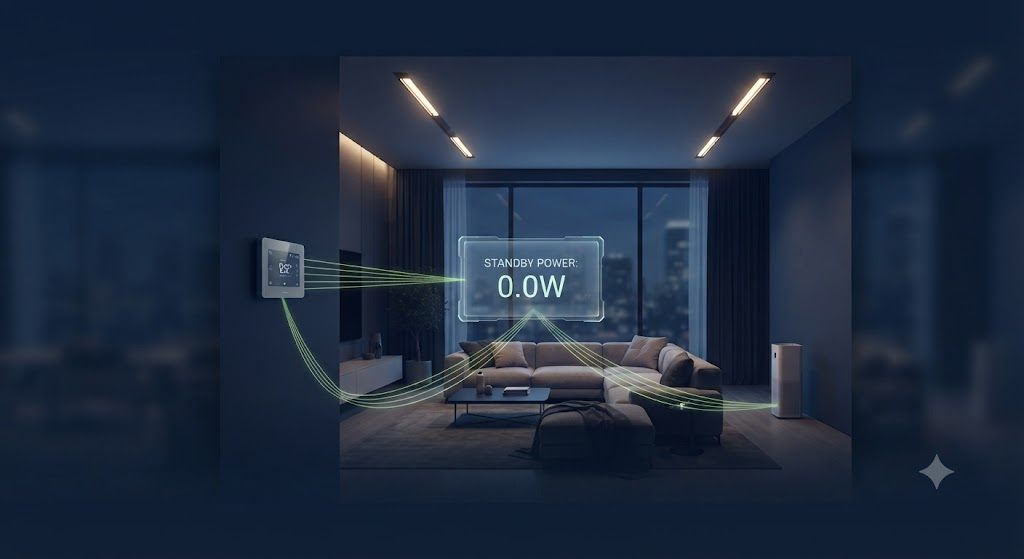
The AI and IoT appliances we rely on exchange Wi-Fi and Bluetooth signals around the clock to stay paired with a smartphone app, even with the screen off. The power this consumes is far from negligible, and electricity leaking out across every room adds up to enormous waste.
02 The blind spot of carbon neutrality — Scope 3 at over 85%
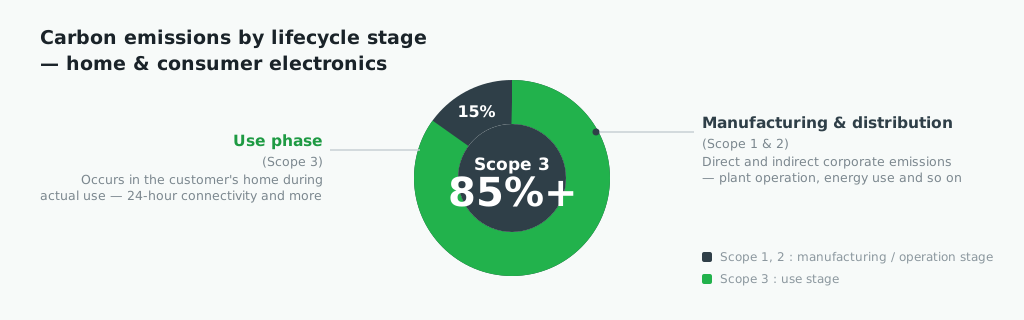
The more serious problem is that carbon emitted during an appliance's use phase (Scope 3) accounts for more than 85% of the total.
Government policy and global appliance manufacturers have concentrated on reducing emissions inside the factory (Scope 1 and 2). That leaves the enormous carbon footprint generated in customers' homes unaddressed — and may amount to a greenwashing trap.
03 Beyond software half-measures — True-Zero 0.0W physical cutoff
Managing standby through software is a half-measure that no longer works. Real carbon neutrality does not come from pretending to be off; it starts with breaking the circuit completely and physically.
WESCON's technology permits not even 0.1W of standby power, realising True-Zero 0.0W — a carbon-neutral solution that looks past the convenience of the smart home to the future of the planet.
04 National energy and economic contribution — four 1GW plants removed
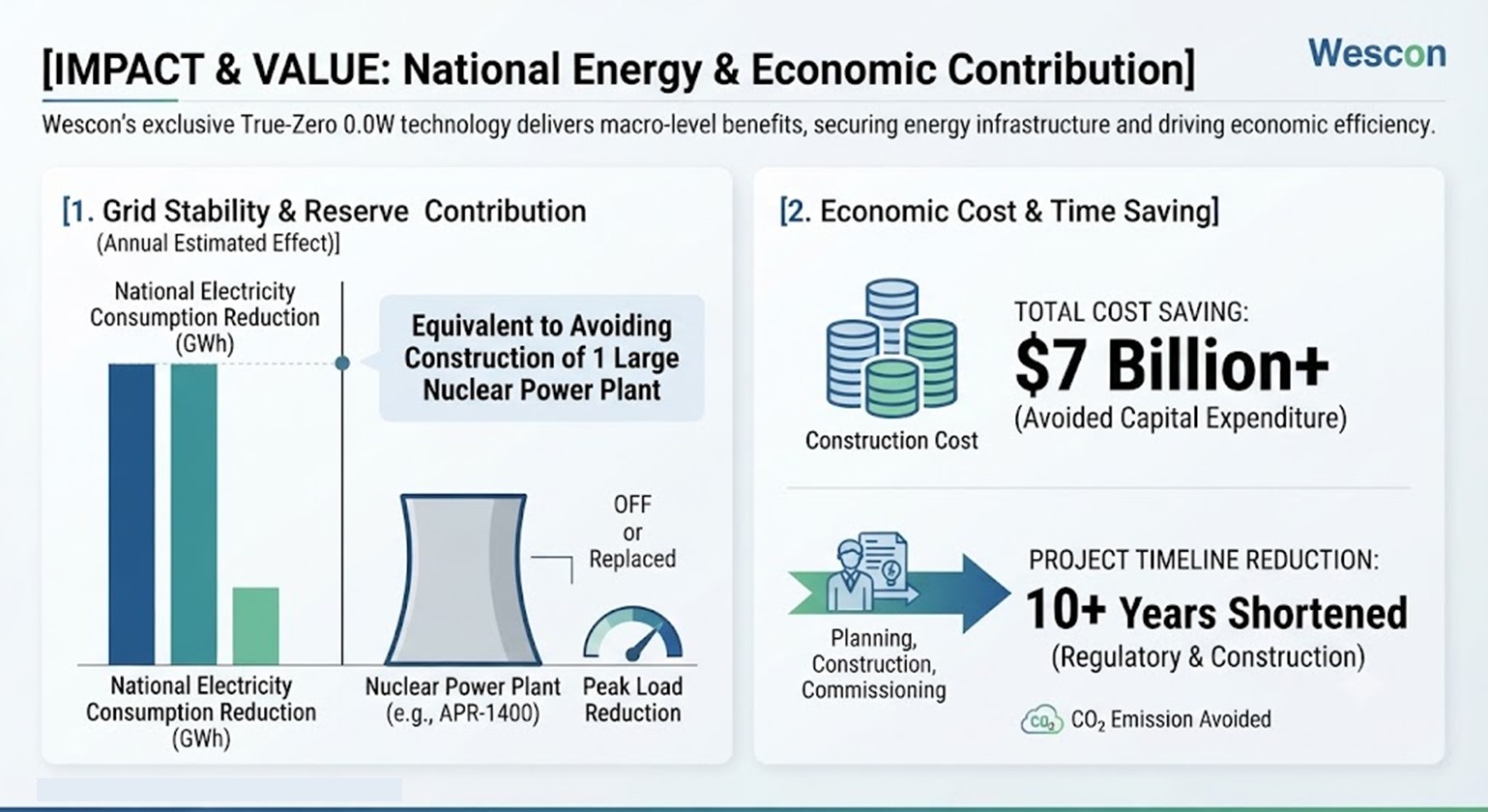
WESCON's proprietary True-Zero 0.0W technology delivers benefits at the macro level, securing energy infrastructure and raising economic efficiency. Cutting standby power on 100 million devices produces the annual impact of removing four 1GW power plants.
Grid stability and reserve margin
Cuts power consumption substantially — equivalent to avoiding the construction of
one large nuclear plant (e.g. APR-1400) while reducing peak load.
Cost and time savings
Achieves more than seven billion dollars in total avoided capital, shortens project
timelines by over ten years through regulatory and construction savings, and
avoids CO₂ emissions at the source.